
Reslience, Acceptance & History: what happens when we embrace imperfection
Have you ever thought about the stories our bikes tell? The histories that are woven into them over the years, which bond us to them in a way that marketeers can only dream of. When we’re constantly bombarded by messages that new is best it can be hard to resist the idea that we’d be living our best cycling life if only we had a new bike. However, I’ve discovered that when I fall prey to the voice that says ‘I need this new bike and life would be perfect’ what I actually need to do is just get out on a bike I already have and go for a pedal.
Several years ago, I was dreaming of buying a handmade ‘rigid fork all terrain bike’ for off-road adventures. Until then I’d been travelling further afield to ride my ‘big bike’ – a full suspension bike best suited to bouncing and twisting down the sides of mountains rather than bumping along bridleways and byways in Kent. Entering my third decade as a parent-carer I am finally coming to terms with the fact that my life is largely rooted in Kent. I might dream of riding big hills but getting away is hard work and creates more exhaustion than it restores. While weekends are trickier, I am lucky that I can calve out time during the week to create guilt-free pockets of adventure on two wheels. In accepting the realities of my world, I’d discovered that I no longer wanted to ride a full suspension bike that made me constantly wish I was somewhere else, riding ‘better’ trails. I wanted to ride a bike that gave me joy where I live and where I ride day-to-day.
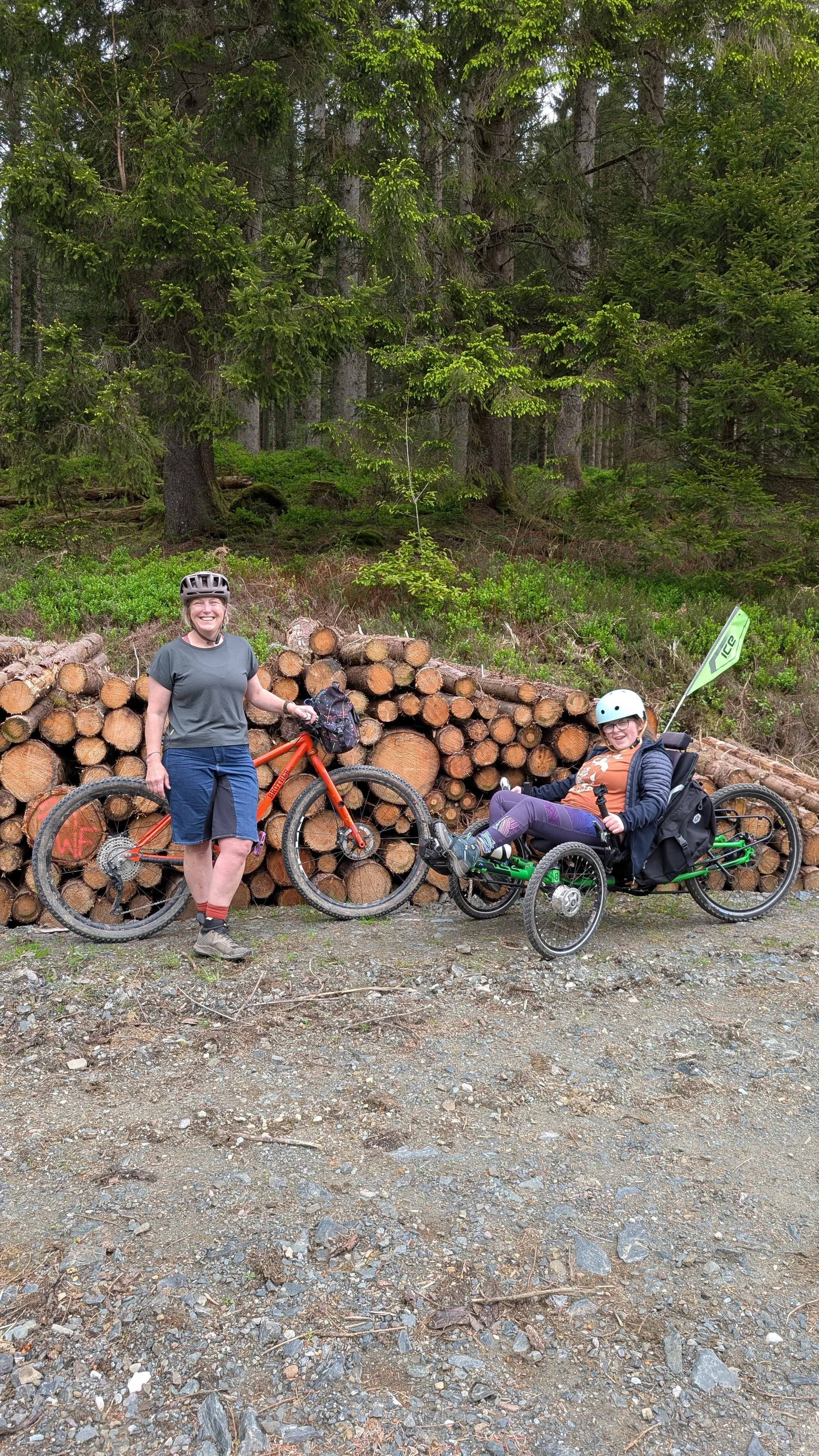
Knowing what type of bike I wanted, I thought about how I value the skill and expertise that goes into building bespoke bikes. I seriously wanted to invest my hard-earned and hard-saved cash in a bike builder who had already made frames for a couple of friends of mine. At the same time, my daughter, CeCe, who has learning disabilities, tried an Ice Trikes Adventure trike and all thoughts of my own build went out the window. This ingenious British-designed machine is a recumbent trike with fully automated gears and electric assistance. It was a game changer; the automatic gears meant her pedalling stayed the same whether she was going uphill or on the flat. Finally, we could ride together off-road, but it was also expensive. I put my ‘new bike’ fund towards the trike and started considering alternatives for myself.
Brother Cycles is a local bike business based a few miles away from me. It is named after James and Will Meyer, the brothers who founded it. Matching my values of small, British designed and made from steel, their ‘Big Bro’ met all my needs. Big Bro’s have taken on mighty endurance races across the world, but the bike was designed by two brothers who live and ride round here, so the DNA of our local riding was ingrained to the core. It wasn’t a hand-built frame, but I still couldn’t afford to buy and build a brand new one, so I waited.
A year or so before, my friend Kristian had given a home to one of the early Brother Cycles Big Bro demo bikes. It had featured in one of their bikepacking films, before Kristian bought it thinking that his wife, Kate, would enjoy cycling it. I knew this bike, what’s more whenever I had seen Kate on it, I felt a yearning to ride it myself. The bike was bright orange, CeCe’s favourite colour, and gave the impression that it could take you wherever you wanted – round local lanes, along bridleways, through claggy winter mud, over sun-baked summer fields – the lot. However, before I had a chance to try riding it, the bike was stolen. Over the next 7 months Kristian scoured local selling pages and spread the word amongst his many friends in the area that it was missing, and he was trying to get it back. Eventually, he got a lead and recovered it. The bike was still rideable, but it was covered in scratches from the months in the wilds of Canterbury’s underworld. By the time they got it back, Kate had realised she didn’t love the bike and wanted a different one, so they put it up for sale at precisely the time and for precisely the budget I had available.
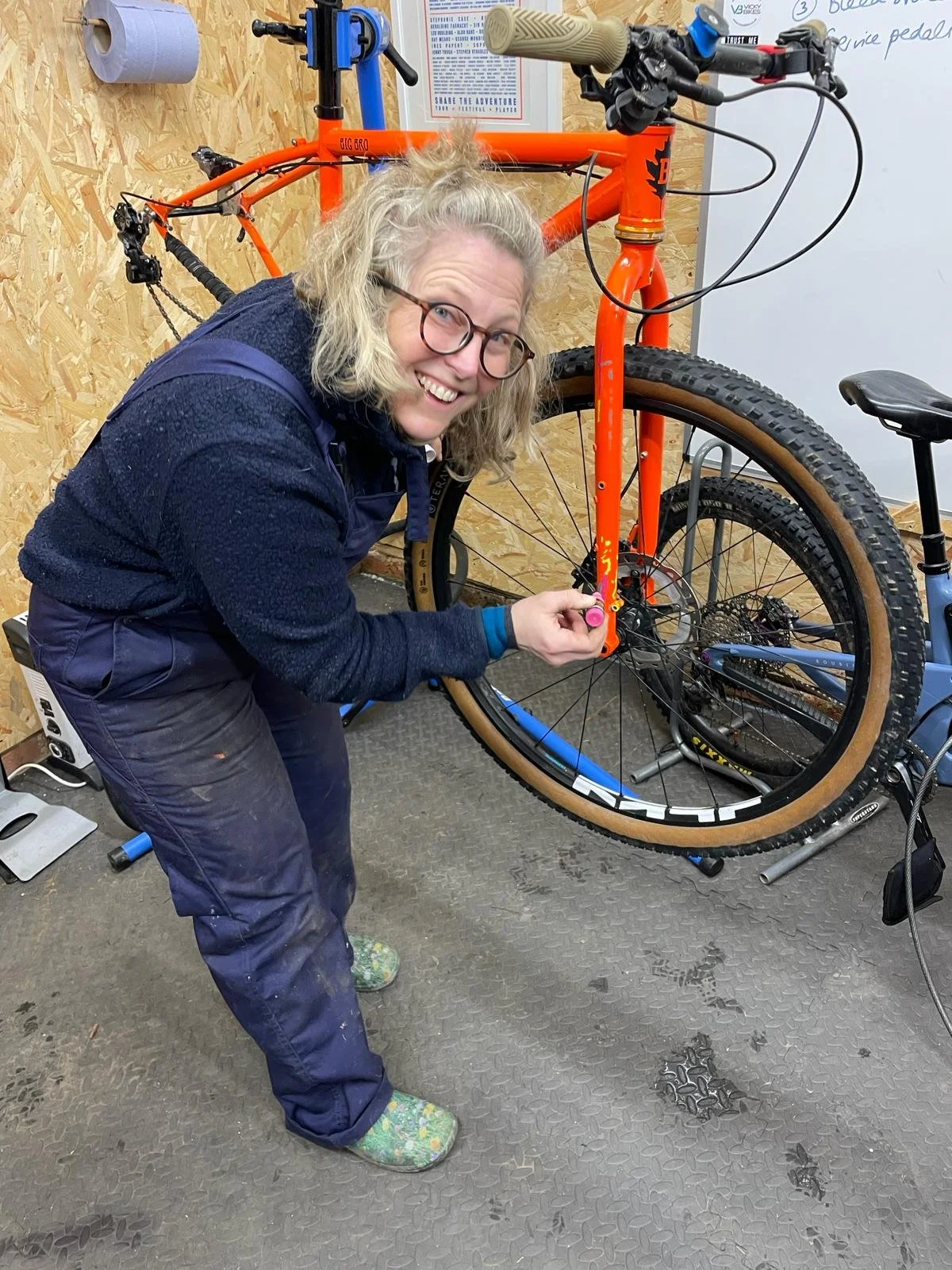
I toyed with the idea of respraying the bike but instead decided to embrace her history. If we’re lucky, over the course of a long life we all find ourselves with a few scars and marks that reveal our story. Why should a bike be any different? The Japanese philosophy ‘wabi-sabi’ teaches that we should embrace imperfection. Through Kintsugi (the art of repair with gold paint), the values of Resilience, Acceptance and History are honoured and celebrated. Instead of hiding the flaws and trying to make my Big Bro look new, I chose to repair her scratches with colourful paints. Taking inspiration from my Wizard Works splatter-patterned handlebar-bag, I cleaned and painted each of the damaged areas to create a frame as unique as its history. As I added each colour, I found my connection to the bike deepening. In parallel with my growing acceptance of my identity as a parent-carer, so too was this bike’s history and resilience beginning to shine through.
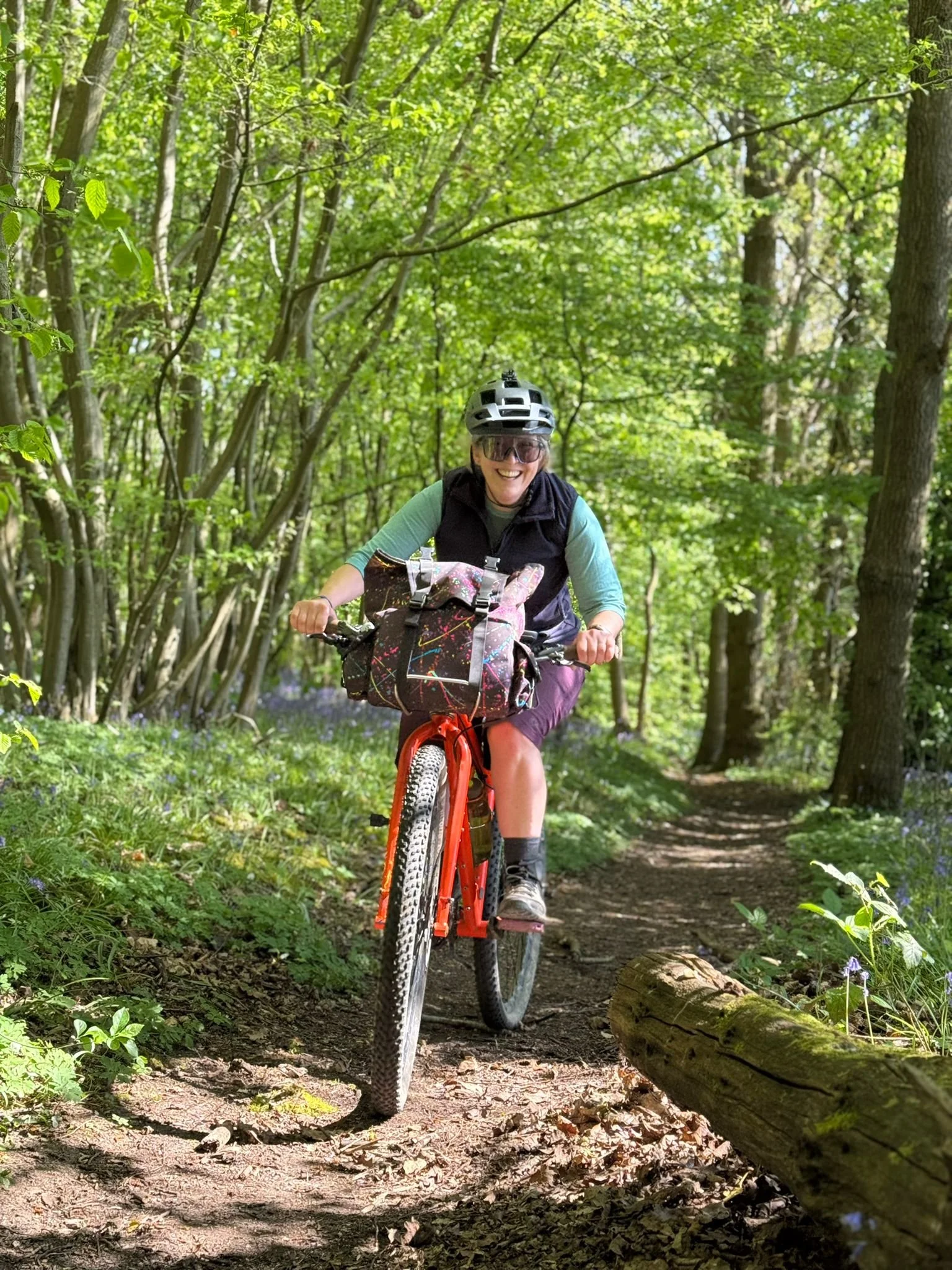
The marketeers’ wily ways still have an impact on me, but as soon as I get out for a ride, I know that I don’t need another bike, I simply need to ride this one more. I’ve owned her for three years now and together we’ve explored and mapped the local byways, bridleways, lanes and trails. When I get bored of tarmac we head to the woods; when I need bread, we head across fields to the bakery; when I want a swim we head along the old trainline to the beach. As we’ve explored together, she’s naturally collected more scratches and marks. At first, I thought about continuing the colourful repairs but I’ve decided that the time has come to honour her with gold. The next chapter of the Big Bro’s life will be coloured with gold paint and so her story continues.